
Warning: Undefined variable $topic in /home/protectedarea/www/www/pat/ptc/themes/protectedareastrust/single.php on line 27
Direct Access to Conservation Financing for Indigenous Peoples and Local Communities
Direct access to conservation financing remains a significant challenge for Indigenous Peoples and Local Communities (IPLCs), despite their critical role in biodiversity conservation and the sustainable management of natural resources. While funding opportunities may exist, many Indigenous communities face barriers that limit their ability to independently access, manage, and benefit from these resources. These challenges extend beyond the availability of funding and include limited technical and administrative capacity, complex application and reporting requirements, geographical isolation, and restricted access to financial institutions.
The experience of the Kanashen Amerindian Protected Area (KAPA), Guyana’s only Indigenous-owned protected area, provides a practical example of these challenges and the importance of developing financing mechanisms that respond to the realities of remote Indigenous communities. The Protected Areas Trust (PAT) provides an annual financial allocation to support conservation and community development initiatives in KAPA. Historically, funds allocated to KAPA have been channelled through the Protected Areas Commission (PAC), which serves as an intermediary between PAT and the community. PAC provides technical and administrative support to the Kanashen Village Council (KVC), including assisting with the preparation of project proposals, developing budgets, preparing technical and financial reports, tracking expenditures, and ensuring compliance with funding requirements. While this arrangement has been important in facilitating access to conservation financing and ensuring accountability, it also highlights the challenges communities face in independently accessing and managing funds without external institutional support.
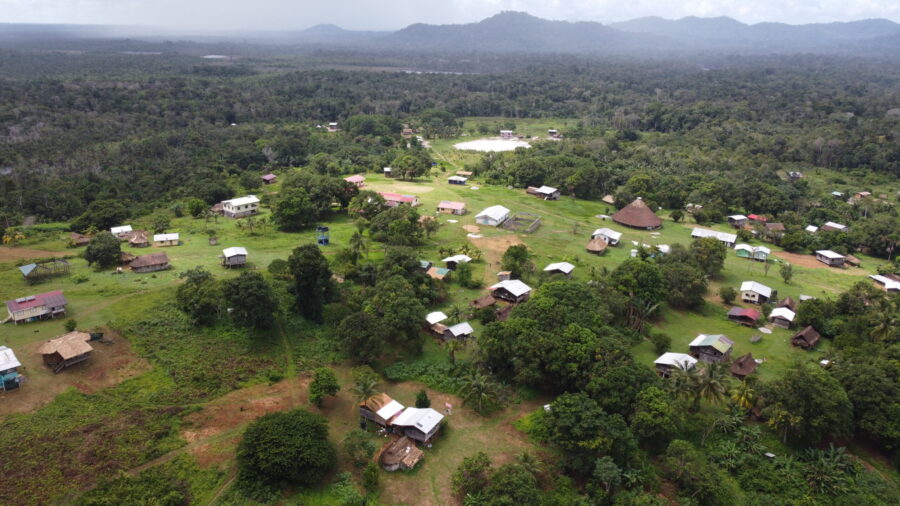
In addition to these administrative challenges, Kanashen’s remote geographical location presents significant barriers to accessing financial services. Community members may have to travel approximately one week to reach the nearest banking facility, a journey that involves considerable time, transportation costs, and logistical arrangements. This demonstrates that direct access to financing cannot be measured solely by whether funding has been allocated to a community. It must also consider the practical ability of communities to access, manage, and utilise those resources.
The reliance on intermediary institutions also reflects broader challenges relating to the technical and administrative capacity required to independently manage conservation financing. Funding applications often require detailed project proposals, budgets, workplans, and supporting documentation. Once funding is approved, communities must comply with procurement procedures, maintain financial records, track expenditures, and submit technical and financial reports. While the support provided by PAC has been instrumental in helping KAPA meet these requirements, strengthening the capacity of the Village Council to undertake these responsibilities independently is essential for achieving meaningful direct access to financing. This requires sustained capacity building and a gradual transfer of financial and administrative responsibilities, supported by appropriate oversight and accountability mechanisms.
Despite these challenges, KAPA demonstrates the importance of ensuring that Indigenous communities remain actively involved in determining how conservation financing is utilised. The Kanashen Green Energy Initiative provides a practical example of community participation in project planning and implementation. The project was developed through consultations with the KVC, with the community identifying the facilities to benefit from the installation of renewable energy systems. The Village Council also selected organisations to serve on the project steering committee. Beyond participating in planning, community members have contributed directly to implementation. For example, the community provided materials and labour for the construction of an inverter hut to house the solar equipment. Community members, rangers, and the Village Council also supported the transportation of solar equipment into the village, including the final stages of transportation by trail and river. These contributions demonstrate that Indigenous communities are not simply beneficiaries of conservation financing but active partners who contribute local knowledge, labour, resources, and leadership to conservation and development initiatives.
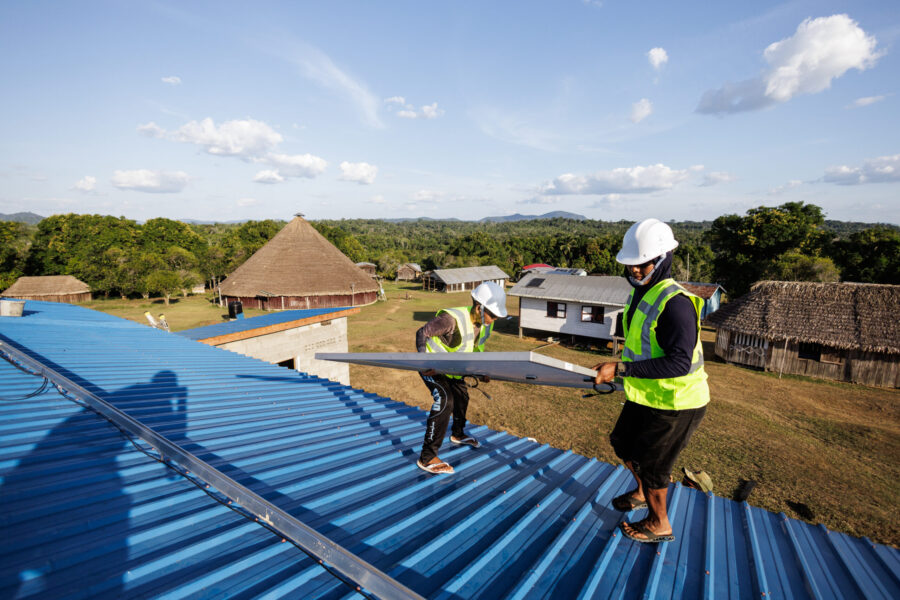
The experience in KAPA also demonstrates how partnerships can help address barriers associated with geographical isolation and limited technical capacity. Under the Kanashen Green Energy Initiative, PAT has worked with the Guyana Energy Agency (GEA), the Guyana Defence Force (GDF), and the Kanashen Village Council to facilitate project implementation. GEA has provided technical expertise for the design and installation of the solar energy system, while GDF supported the transportation of equipment from Georgetown to Lethem. Community members subsequently supported the movement of equipment through difficult terrain and along river routes to reach the village. These partnerships have been essential in overcoming challenges that would have been difficult for the community to address independently. However, they also demonstrate that providing financing to remote Indigenous communities often requires additional investments in logistical support, technical assistance, and coordination beyond the direct cost of project activities.
The experiences from KAPA highlight the need for conservation trust funds to adopt financing approaches that are both accessible and responsive to the circumstances of Indigenous communities. While intermediary arrangements, such as the support historically provided by PAC, play an important role in facilitating access to funding and ensuring compliance with financial requirements, they should also create opportunities for communities to progressively develop the skills and systems necessary to manage resources independently. For PAT, this includes continuing to strengthen the capacity of the KVC and community members in project planning, financial management, procurement, expenditure tracking, and reporting, while exploring ways to make funding disbursement and administration more accessible. It is equally important that financing arrangements recognise the contributions communities already make through local knowledge, labour, materials, and leadership, rather than viewing them solely as recipients of external funding.
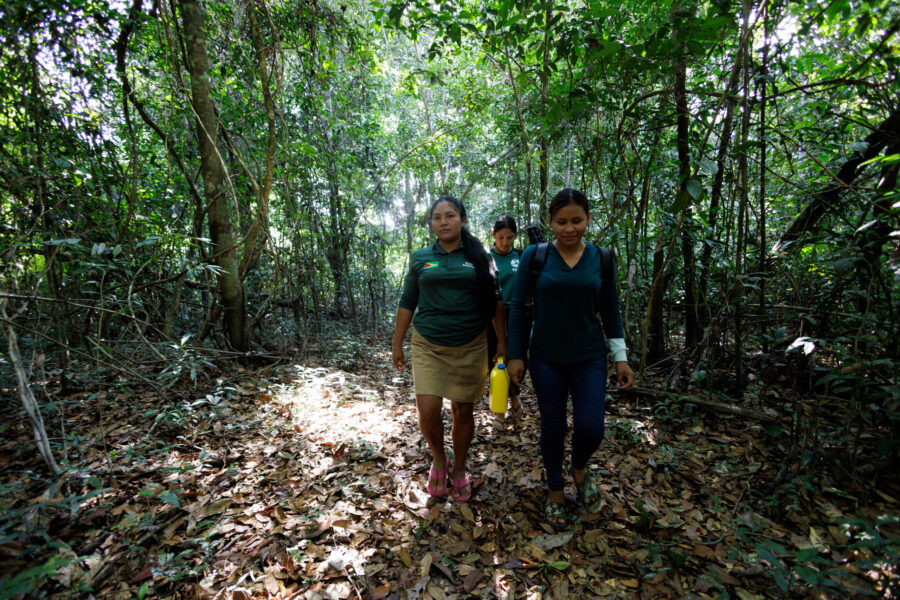
Direct access to conservation financing should be measured not only by the amount of funding allocated to Indigenous communities, but also by their ability to access, make decisions about, manage, and account for those resources independently. The experience of KAPA demonstrates that achieving meaningful direct access requires long-term investment in community capacity, flexible financing mechanisms, and partnerships that strengthen Indigenous ownership. The long-term objective should be to move beyond reliance on intermediaries towards a system in which Indigenous communities have the capacity, confidence, and institutional structures to directly manage conservation financing while maintaining transparency and accountability.